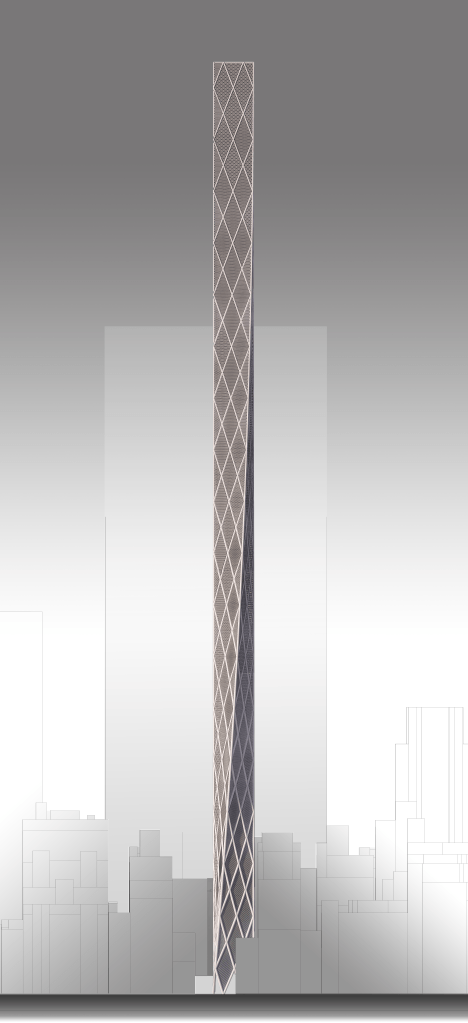
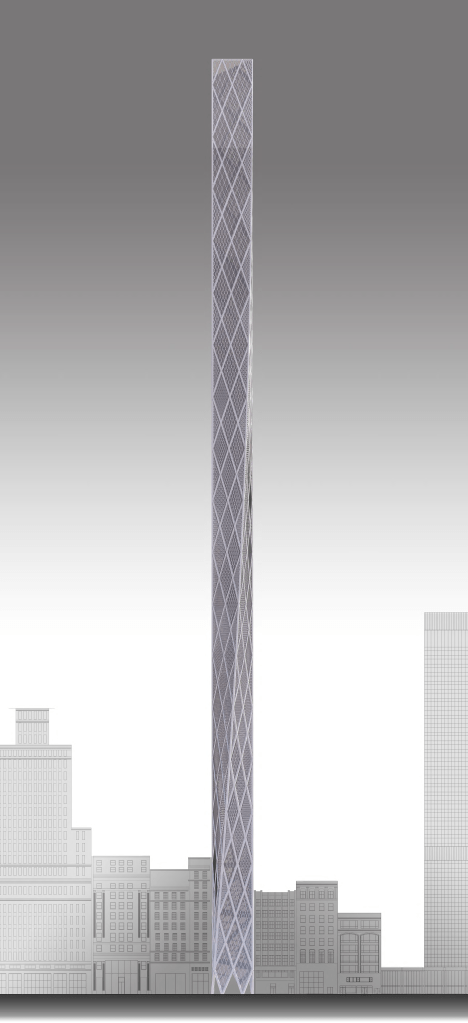
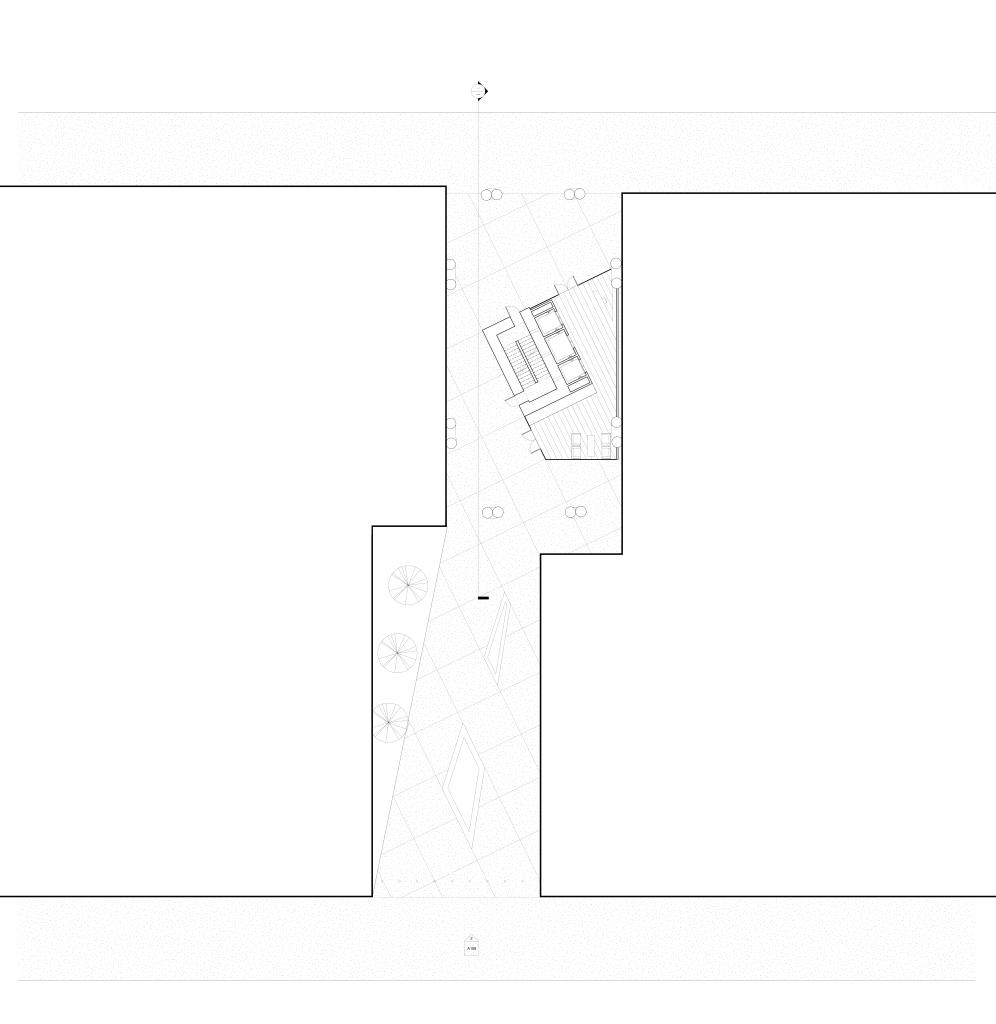
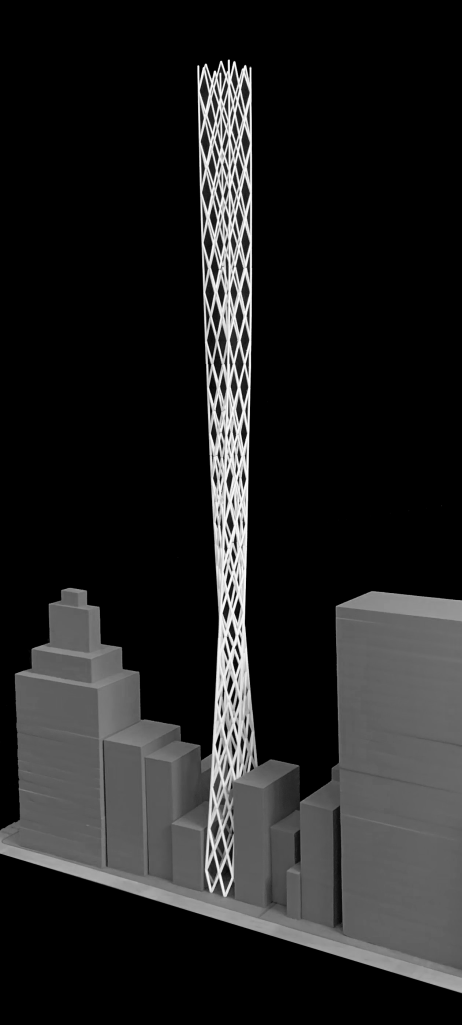
After a field trip to New York City, I was tasked with designing a skyscraper on Billionaires’ Row in Midtown Manhattan.
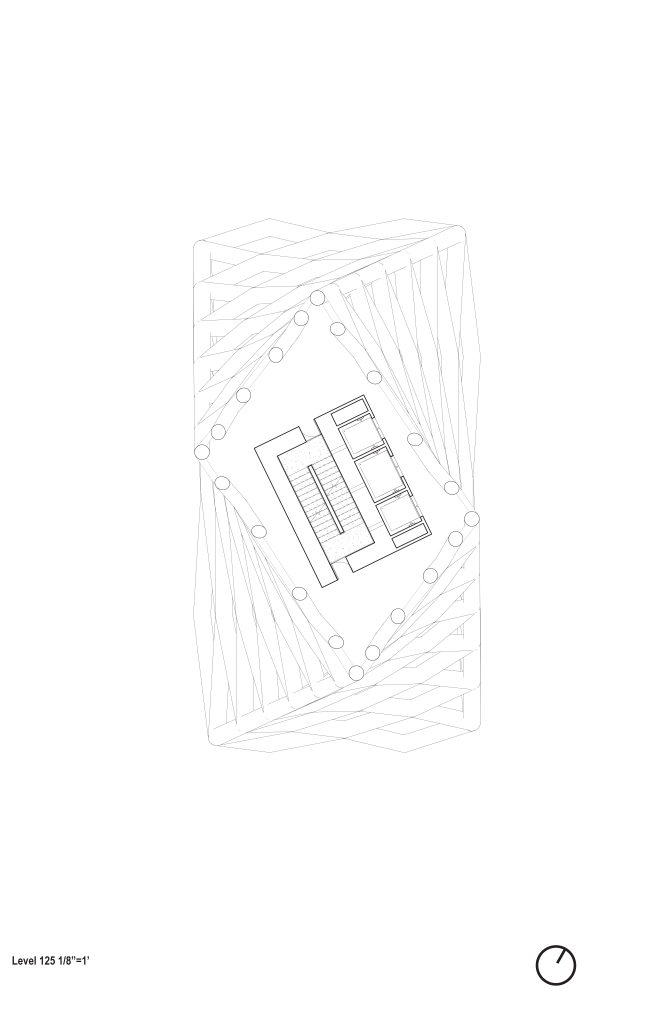
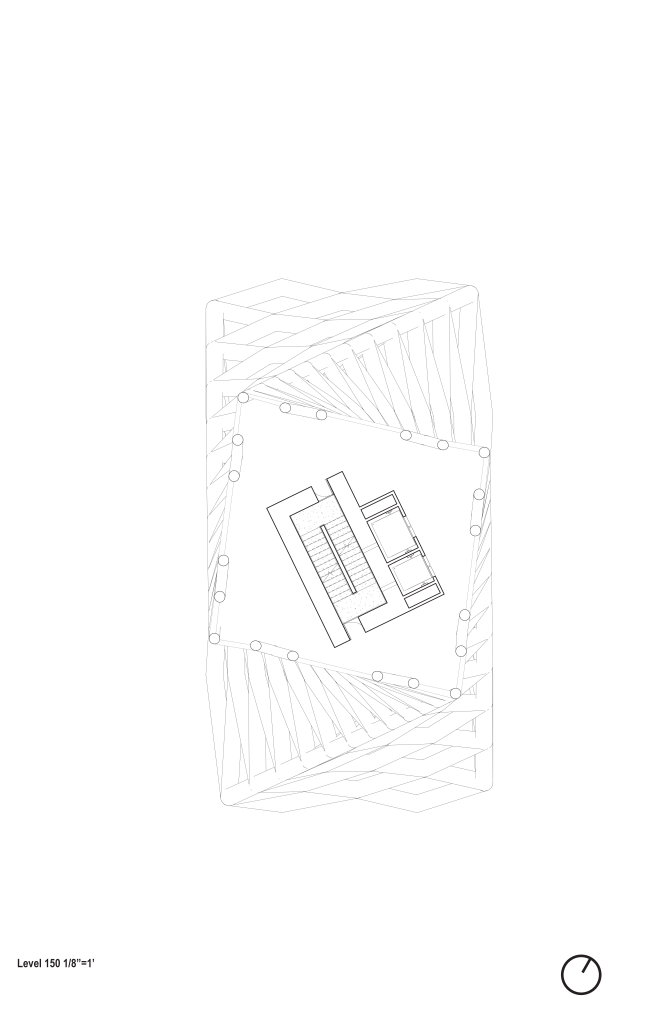
The main objective was to design a shell building that met local NYC zoning laws. I chose to make a residential tower that minimized floor area on lower floors and maximized buildable area on the higher floors which had a view of Central Park to the north and lower Manhattan to the south. This goal was accomplished by writing a script in Grasshopper that included maximum buildable area and building setback restrictions.
After completing the form of the building I turned my attention to the curtain wall. My goal here was to increase transparency on the northern facing portions of the building and reduce it on southern portions, however, the rotation of the facades presented a challenge. I again wrote a script in Grasshopper and utilized a paneling tools plugin for Rhino. This allowed me to change the number of mullions in each grid on the façade, the closer it was to the north the fewer mullions that grid space would receive. These strategies created a dynamic façade that changes with the form of the building while simultaneously reducing interior glare and directing attention towards Central Park.
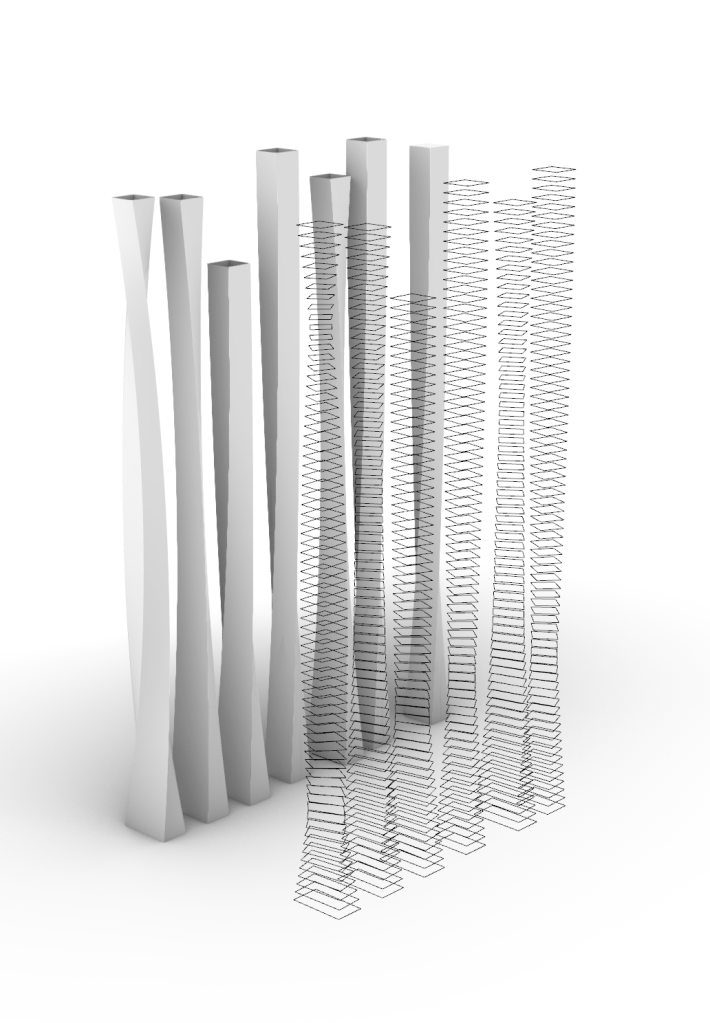
Above
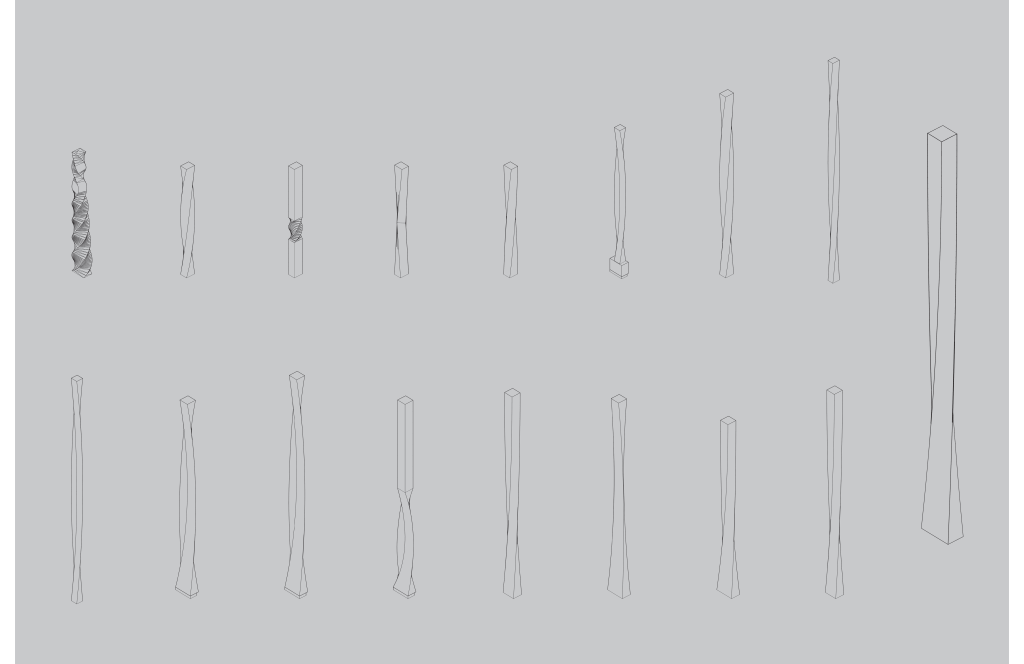
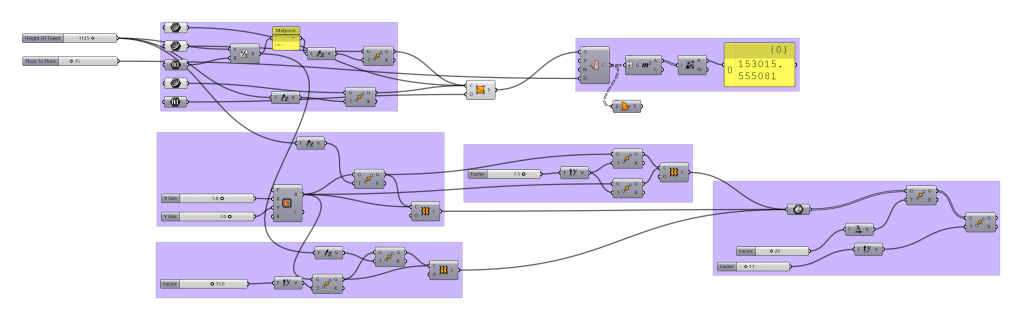
A grasshopper script was designed to help generate massing options. The script takes into account New York City zoning laws like setbacks, floor area ratio, and building square footage. The script works by lofting a set of rectangles to form a mass, then contouring the mass into floors at a set interval which are then used to calculate the masses gross square footage. Examples of forms generated using the script are shown beneath the script.
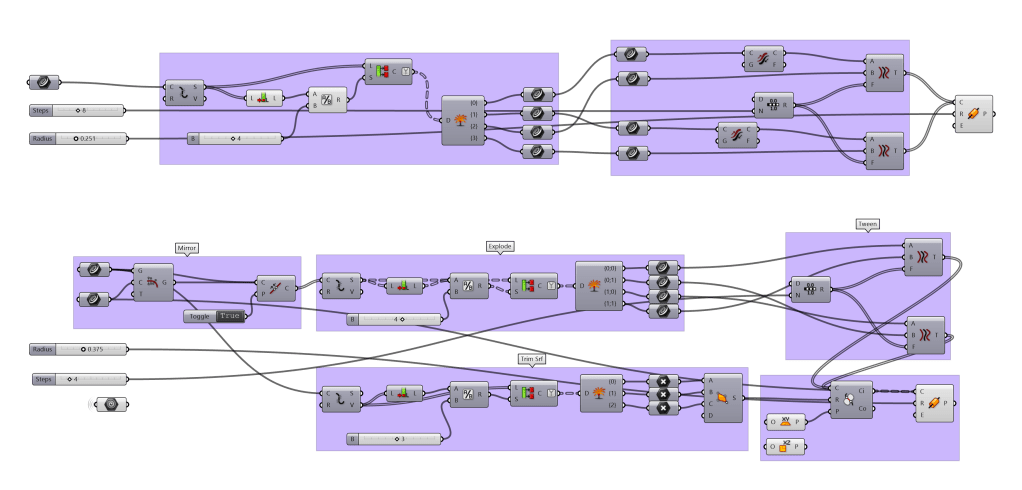
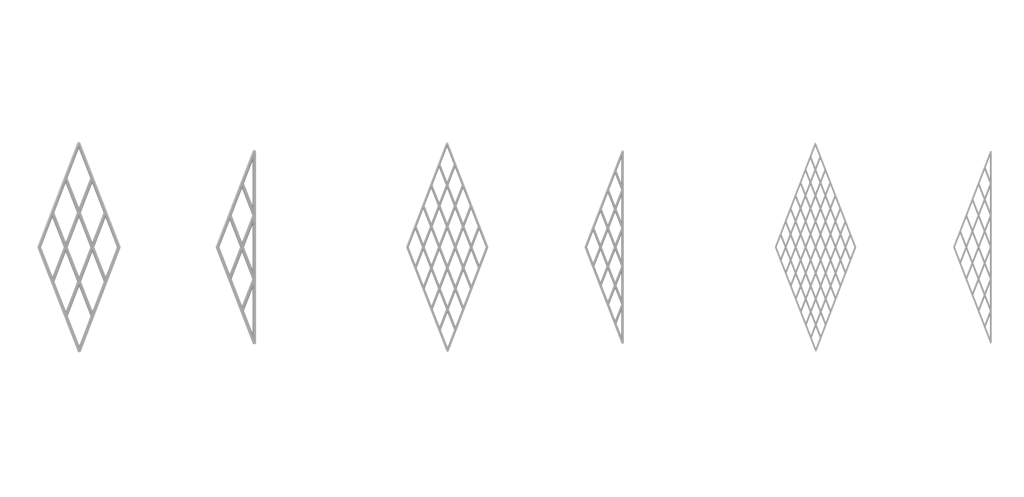
Above
After a form was decided each façade was subdivided into diamonds using Paneling Tools. Each diamond panel was assigned a value indicating the panel’s orientation. If the panel faced more towards the north it would eventually have less mullions allowing more light in. If the panel faced south it would have more mullions allowing less light in. A script was then written that subdivided each panel with the desired amount of mullions. A second script was required to deal with the half diamond panels which exist on the corners of the structure.


 Rory C Fitzpatrick